

Yes, you can fix structural metal decking to timber, ICF and masonry. Fixing metal decking to timber and masonry is achievable with the right methods and fasteners, ensuring durability and structural integrity. Here’s a practical guide to getting the job done effectively with metal deck.
Fixing Metal Decking to Timber
Recommended Fasteners
- Use self-drilling wood screws, designed specifically for metal-to-wood applications. Screws with high pull-out strength are ideal.
- For higher load requirements, timber frame bolts or countersunk screws with washers can be used for added strength and a flush finish.
Spacing and Layout
- Maintain screw spacing of 300 to 600mm, depending on load requirements and the timber beam spacing.
- Avoid placing screws too close to the timber’s edge to prevent splitting (minimum 25mm edge distance).
Best Practices
- Consider pre-drilling pilot holes for hard timber to avoid splitting.
- Add a damp-proof course (DPC) layer or rubber gasket between the timber and metal deck to prevent moisture transfer.
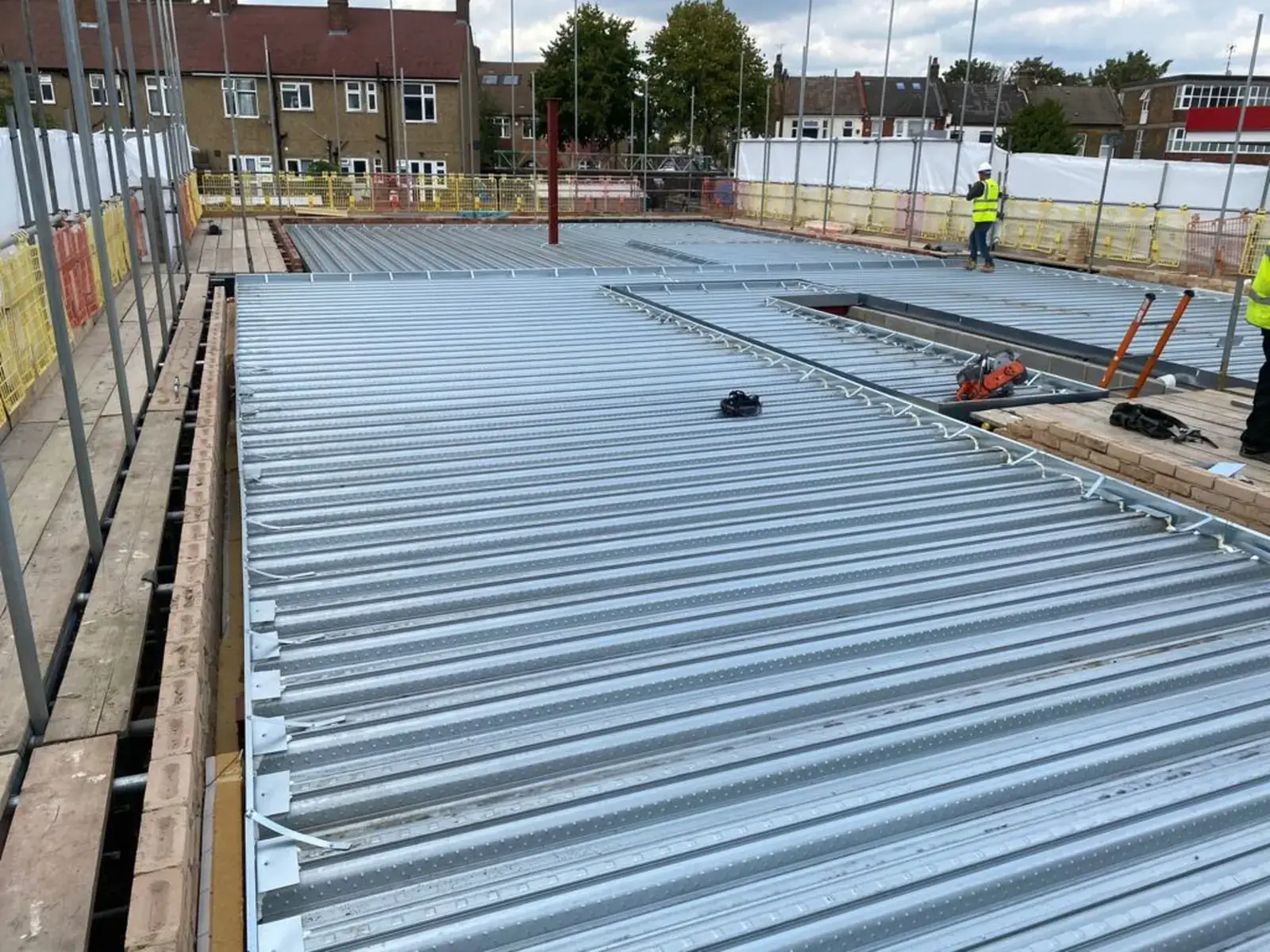
Fixing Metal Decking to Masonry
Recommended Fasteners
- Use masonry screws for direct fixing, or expansion anchors for higher loads.
- For heavy-duty applications, chemical anchors with epoxy resin are the best choice.
Installation Tips
- Drill precisely sized holes using SDS masonry drill bits to match the anchor specifications.
- Place anchors every 400 to 600mm, ensuring they meet design requirements.
Surface Preparation
- Ensure the masonry surface is clean, level, and capable of bearing the applied loads. Weak masonry may require additional reinforcement.
Reinforcement
- In some cases, installing a steel plate or angle on the masonry can provide a more secure fixing point.
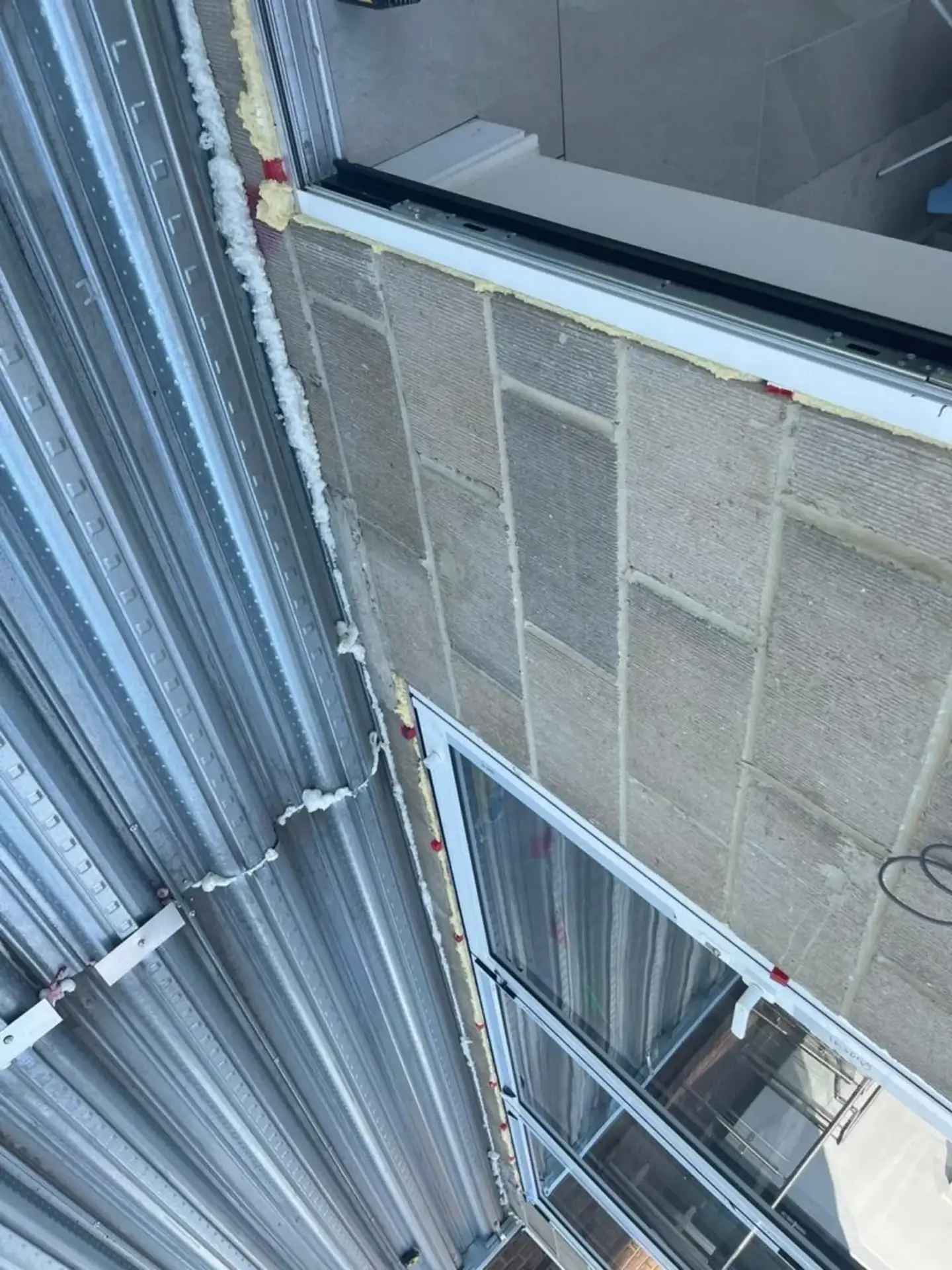
Fixing Metal Decking to Insulated Concrete Formwork (ICF)
ICF systems are increasingly popular for modern, energy-efficient builds, offering a solid base for metal decking. Here’s how to attach decking to ICF walls:
- Specialist screws and plates: Use fasteners designed specifically for ICF, such as screws that penetrate the plastic webbing within the forms. Attach a steel plate for additional stability if necessary.
- Anchor points: If the ICF is reinforced with embedded steel or concrete cores, chemical anchors or expansion bolts can provide a secure fixing.
- Advantages: ICF paired with metal decking creates a highly efficient structure, offering excellent thermal performance, fire resistance, and faster installation times compared to traditional methods.
Key Considerations
- Load calculations: Always consult a structural engineer to verify the substrate’s load-bearing capacity, especially for live loads, wet concrete, and wind uplift.
- Corrosion protection: Use galvanised or stainless-steel fasteners in environments exposed to moisture or chemicals.
- Quality assurance: Conduct on-site pull-out tests to verify fixing strength and compliance with design requirements.
By choosing the right materials and methods, you can secure metal decking effectively to timber, masonry, or ICF, ensuring a robust and reliable build for any project. Contact RMD Profiles for specific details on your project and to simplify the process.